
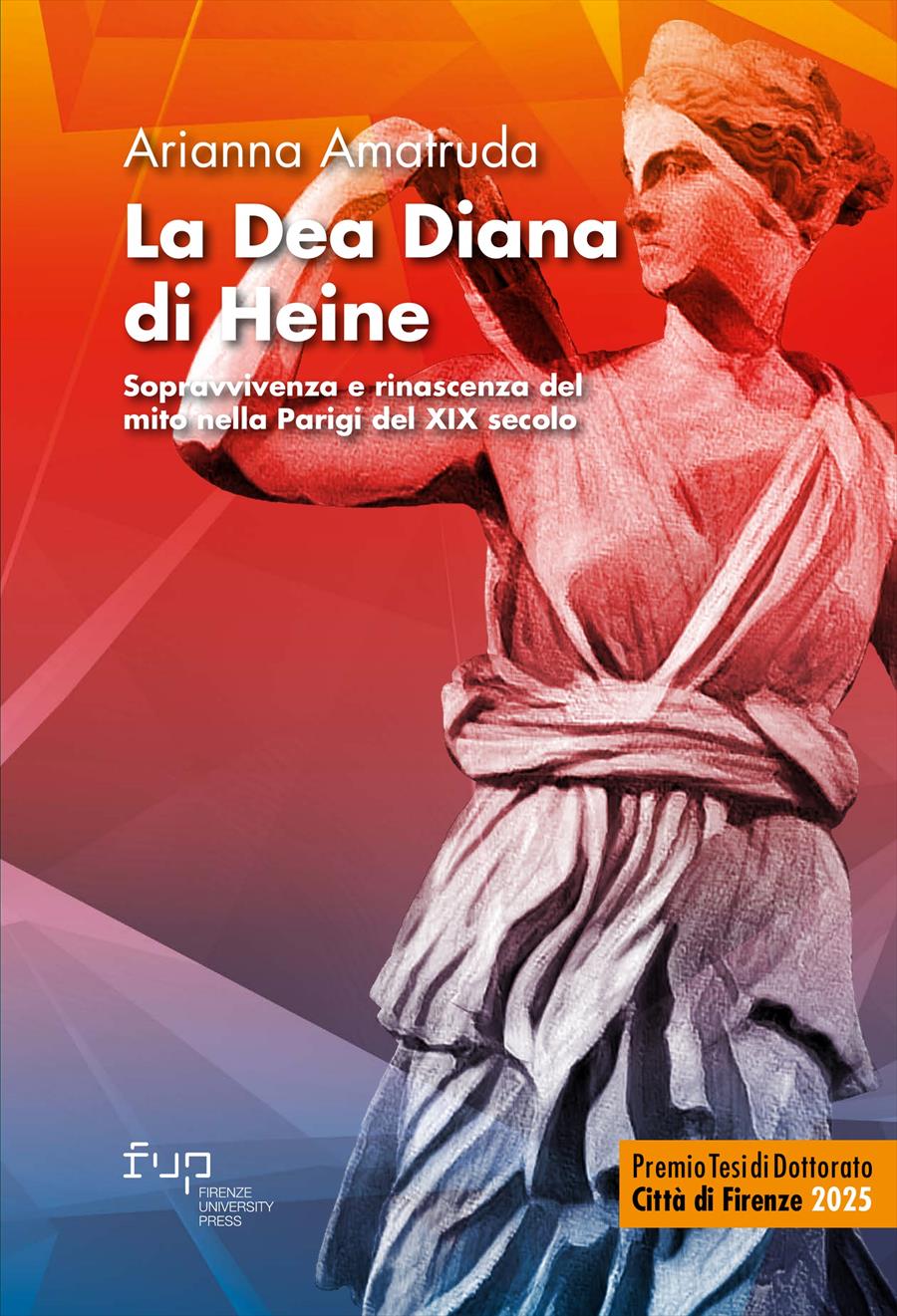
- La Dea Diana di Heine
- Arianna Amatruda
Diana nelle lettere
- Arianna Amatruda

- © 2026 Author(s) |
- CC BY 4.0
- DOI: 10.36253/979-12-215-0969-4.08
The first part explores the figure of Diana–Artemis from antiquity to the nineteenth century through religion, visual arts, and literature, tracing the transformations of her cult, iconography, and literary reception from ancient traditions to their reinterpretations in modern German culture. The chapter examines the presence of Diana in literature, from the Homeric poems and Hellenistic and Latin erotic poetry to the parodic rewritings of the myth in modern German literature.
- Keywords:
- Diana in Homeric poetry,
- Diana in Ovid’s Metamorphoses,
- Diana in Latin erotic literature,
- Diana in the Goethezeit,
- Diana in German Romanticism,
University of Florence, Italy - ORCID: 0000-0002-4271-2597
Chapter Information
Chapter Title
Diana nelle lettere
Authors
Arianna Amatruda
Language
Italian
DOI
10.36253/979-12-215-0969-4.08
Peer Reviewed
Publication Year
2026
Copyright Information
© 2026 Author(s)
Content License
Metadata License
Bibliographic Information
Book Title
La Dea Diana di Heine
Book Subtitle
Sopravvivenza e rinascenza del mito nella Parigi del XIX secolo
Authors
Arianna Amatruda
Peer Reviewed
Number of Pages
348
Publication Year
2026
Copyright Information
© 2026 Author(s)
Content License
Metadata License
Publisher Name
Firenze University Press
DOI
10.36253/979-12-215-0969-4
ISBN Print
979-12-215-0968-7
eISBN (pdf)
979-12-215-0969-4
eISBN (xml)
979-12-215-0970-0
Series Title
Premio Tesi di Dottorato Città di Firenze
Series ISSN
3103-3881
Series E-ISSN
3103-3989